
Body Waxing and Sugaring Questions People Actually Ask (And Want Real Answers To)
From arms to backs, bellies, and the bikini zone, sugaring can handle it all. But let’s be real: you’re probably not here for a dictionary definition. You’re here because you’ve got questions. The kind that don’t always get answered in a quick Google search like “What if I’m on medication?” or “Do I have to be totally naked?”
This page is built for you. We break down exactly what happens during body waxing and sugaring, how it works on different parts of the body (and different types of bodies), and what to do (and not do) between appoinments. Not sure where to begin or have concerns about interactions with certain skin conditions? Here's the one sugaring safety section everyone ends up reading...usually after it's too late!
What is Sugaring and Why People Choose It
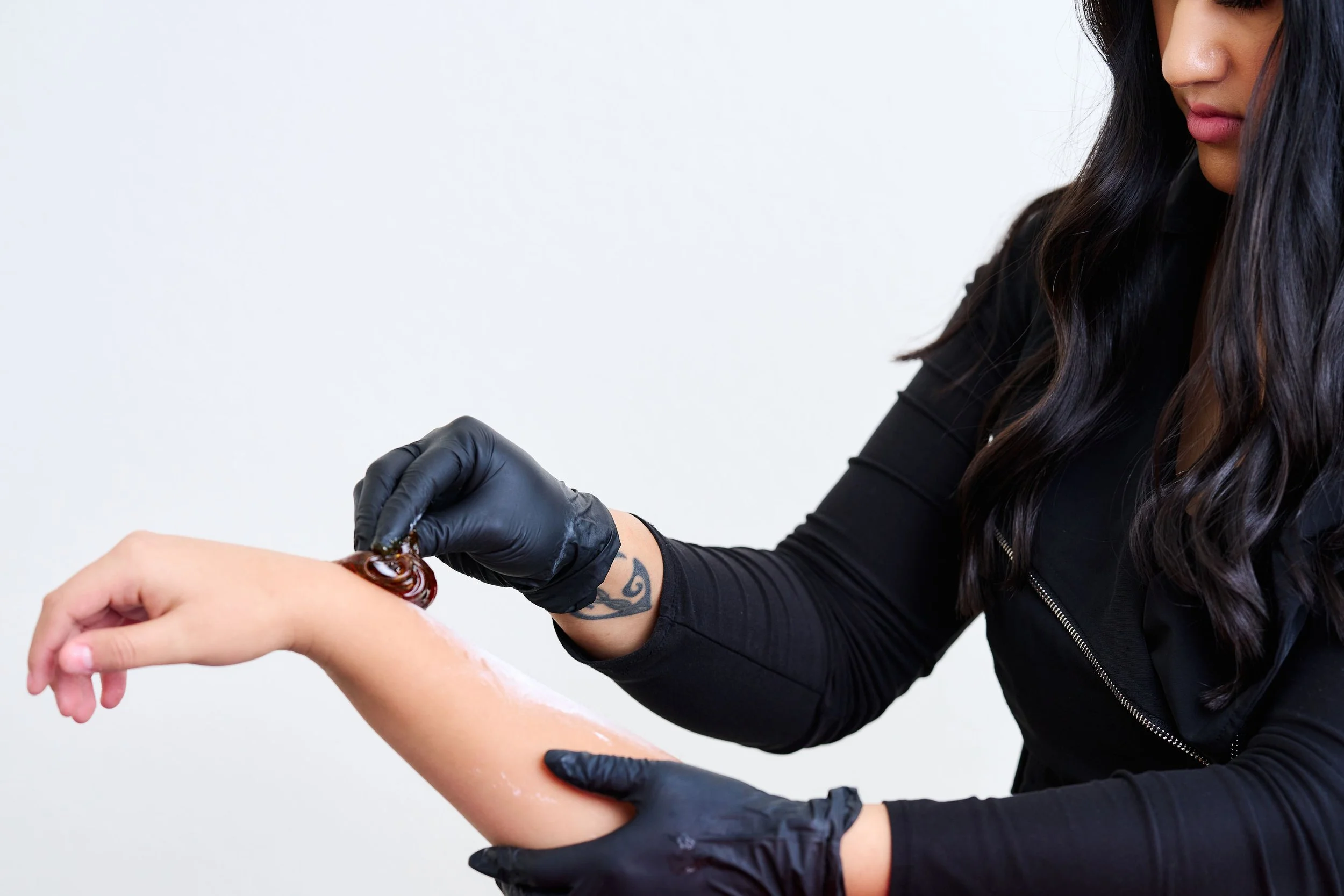
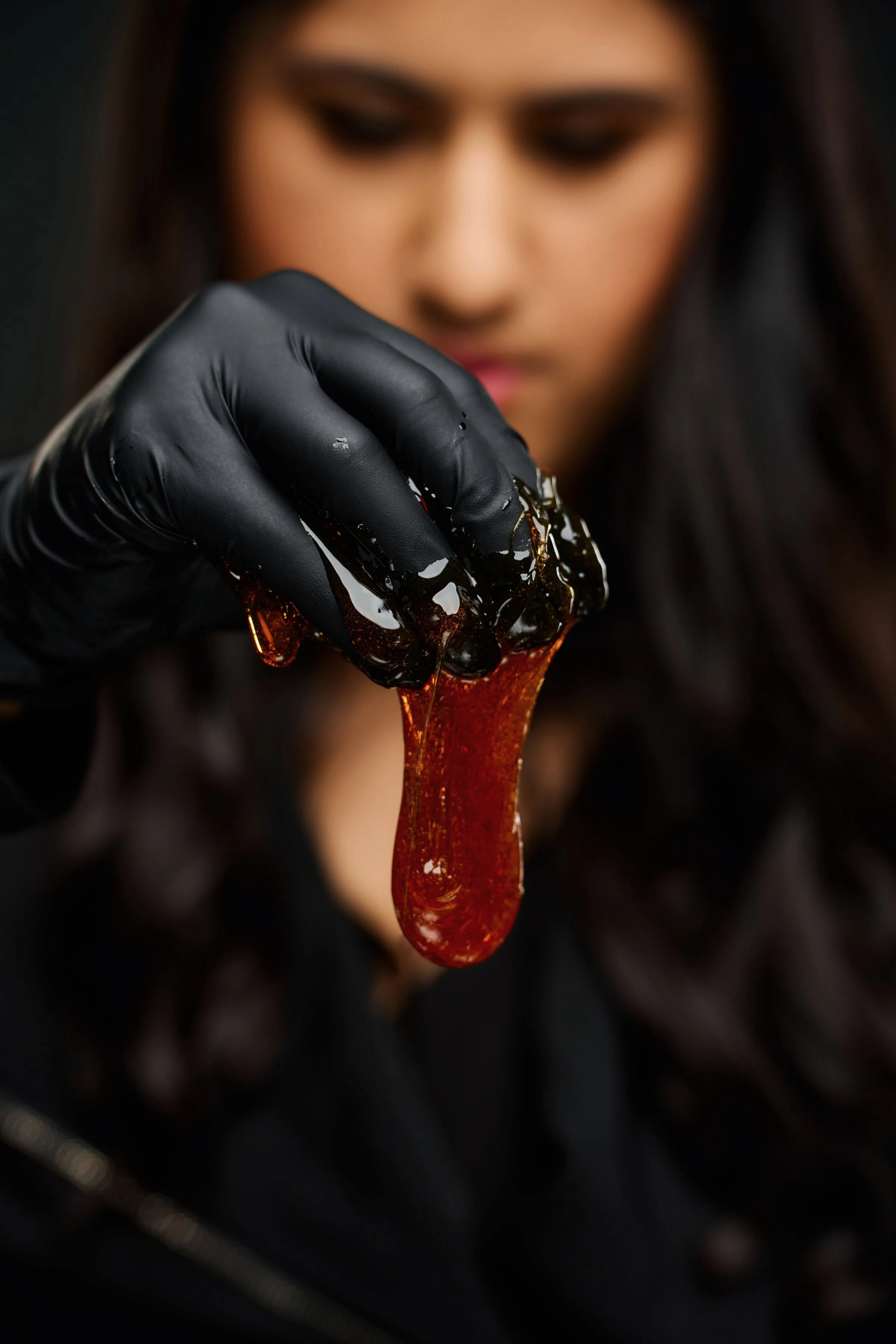
Sugaring is like the old-school, all-natural BFF of hair removal: just sugar, lemon, and water, mixed into a paste that’s surprisingly powerful and seriously gentle. Like waxing, it removes hair at the root which thins out the hair overtime and discourages regrowth. But unlike waxing, sugaring grabs hair with the grain, not against it, which means less “ouch” and way fewer ingrowns. People love it because it doesn’t just remove hair, it leaves your skin feeling smooth, calm, and cared for. Sensitive skin? No problem. Sugaring doesn’t cling to live skin cells, so it’s more of a “Thank Goodness" than a sticky situation. Once you try it, it’s hard to go back because your skin remembers the difference. Have some awkward questions about the process? Here’s what first-timers want to ask (but don’t always say out loud).
What to Know About Waxing and Sugaring Safety and Skin Conditions
-
Most people can safely receive body waxing and sugaring treatments, but there are some exceptions based on skin conditions, medications, or recent treatments. For example, those using topical retinoids or undergoing chemical exfoliation should avoid waxing or sugaring until their skin barrier has fully recovered. If you’re on oral acne medication, receiving chemotherapy, or have a compromised immune system, it’s best to consult your healthcare provider before scheduling. Always let your waxer know about any medications or conditions, there may be adjustments or alternative timing recommendations.
-
When performed on healthy, properly prepped skin, neither waxing nor sugaring rarely causes long-term damage. That said, both waxing and sugaring over sunburned skin, open wounds, or active rashes can disrupt the skin’s natural barrier, increasing the risk of post-inflammatory hyperpigmentation or prolonged sensitivity. Repeated hair removal using either methods on already irritated areas can compound inflammation, especially if aftercare is skipped. If you're dealing with recurring irritation, it’s worth reviewing your aftercare routine and making sure your skin has enough time to recover between sessions.
-
Not really. Waxing or sugaring too soon after shaving typically leads to poor results and higher discomfort. The hair needs to be at least a quarter-inch long, about the length of a grain of rice, for the wax to grip properly. Shaving too recently leaves the hair shaft too short, which can increase the risk of ingrowns or patchy results. Waiting 2–3 weeks after shaving gives the best outcome and helps avoid unnecessary irritation.
Waxing and Sugaring, Modesty, and All the Quiet Things People Worry About (But Don’t Always Ask)
-
Yep, you’ll need to be undressed from the waist down so we can safely and thoroughly wax the area. But we promise it’s never weird on our end, and we’re pros at keeping things comfortable, low-pressure, and respectful. Most clients feel more at ease than they expected once we get started. If you’re nervous, just let us know, we’ll talk you through it and move at your pace. Curious what the actual process looks like? See what to expect during a Brazilian wax here.
-
Absolutely not. We’re here to remove hair, not to evaluate your grooming habits. Forgetting to shave your legs, sweating a little, or not feeling “spa-ready” is completely normal. Honestly, in this line of work, we’ve seen it all, and none of it fazes us, and we're probably rocking leg hair ourselves. You just showing up is more than good enough.
-
Happens all the time, and we don’t even flinch. Bodies do weird stuff when they're nervous, relaxed, or somewhere in between. Crying, shaking, laughing, passing gas… it’s all part of the human experience. We stay calm, you stay human, and the appointment goes on just fine. If you have more questions, you are unsure about asking, our Brazilian Waxing Page probably has the answer.
Waxing and Sugaring: Can I Still Do It If My Skin’s Acting Up, I’m On Meds, or the Timing’s Weird?
-
If your skin is freshly tanned or still warm from sun exposure, hair removal via waxing or sugaring is usually a no-go. The outer layer of skin becomes more fragile after UV exposure or spray tanning, which increases your risk of lifting, irritation, or uneven pigment changes. We recommend waiting at least 3–5 days after tanning (longer if you’re sunburned or peeling) so your skin barrier has time to stabilize.
-
It depends on the severity and location. If your skin is currently flaring, cracked, or inflamed, waxing or sugaring over it can trigger more follicle trauma, infection risk, or delayed healing. If the area is clear or in remission, it’s often okay, but you should always give your waxer or sugar artist a heads up that you have psoriasis or eczema so they can assess in person. Trust me, you’re not the first client to ask this, and we take your skin’s condition seriously.
-
If you’re on oral antibiotics, your skin may be more reactive or photosensitive, which raises the risk of skin lifting or prolonged redness. It’s safest to wait until you’ve finished your prescription and your skin feels fully healed, usually about 5–7 days post-medication. Always let your esthetician know what you’re taking; it’s a no-judgment conversation that helps us keep your service safe.
The In-Between Window: What to Expect (and What to Avoid) Between Appointments
-
Totally get the temptation, especially if you’ve got a wedding, photo shoot, or Kennewick pool day on the calendar. But shaving between waxes can mess with your hair growth cycle, making your next wax more uncomfortable and less effective. If you're in a pinch, talk to your waxer about how far out you are, there might be a better option than reaching for the razor.
-
Not necessarily. Hair grows in stages, and it’s totally normal to see new growth from follicles that weren’t in the active phase during your appointment. Especially in the first few waxes, patchiness or early regrowth isn’t a failure; it’s your body syncing to the new rhythm. With consistency, those random hairs fall into line.
-
You can absolutely still get a Brazilian wax or sugared during your period, it’s more common than you think. Just wear a clean tampon or menstrual cup, and give your esthetician a heads up when you arrive. That said, your pain tolerance can dip during this time due to hormonal shifts.
-
Yes, light exfoliation is encouraged after the first 48-hour window, once the skin barrier has had a chance to calm down. Aftercare post-wax is very important. A gentle scrub or chemical exfoliant helps prevent ingrown hairs and keeps regrowth feeling smoother. Just skip anything harsh or fragranced, your skin’s still in healing mode.